Yoctobe Services
Healthcare software development
Healthcare software development is not a niche version of general app development — it is a different discipline. Yoctobe builds clinical platforms, specialty modules and integration layers for organisations where a UX mistake is a patient safety risk, a database outage is a clinical incident, and a failed procurement review costs months of runway.

Software Built For Clinical Reality
Generic dev shops underestimate clinical nuance, audit requirements and integration debt. A form that crashes during a ward round is not a minor bug. A missing HL7 message that loses a critical lab result is not a backlog ticket. Yoctobe combines healthcare domain expertise with engineering discipline — ISO 13485-aware processes, FHIR/HL7 fluency and delivery models that respect clinical stakeholder time.
Healthcare software development means safe workflows, defensible audit trails, interoperability with the systems you already run and documentation your information governance team can stand behind. We build for hospitals, laboratories, specialty clinics and healthtech vendors who need software that survives real-world deployment — not a prototype that stalls at procurement review because the security questionnaire was not anticipated.
Whether you are replacing a spreadsheet-driven process, extending an EHR with a specialty module or launching a patient-facing portal, we scope work against measurable outcomes — reduced manual entry, faster turnaround or clearer compliance evidence — so investment maps to operational value.
Our products
Platforms We Have Built & Ship
Yoctobe is not only a services partner — we develop, deploy and support clinical products used in hospitals, laboratories and care settings across the UK, EU and Africa.

Promed HIS
Hospital and clinic platform — EHR, appointments, pharmacy, imaging, billing and ward workflows on one patient record.
Solution page
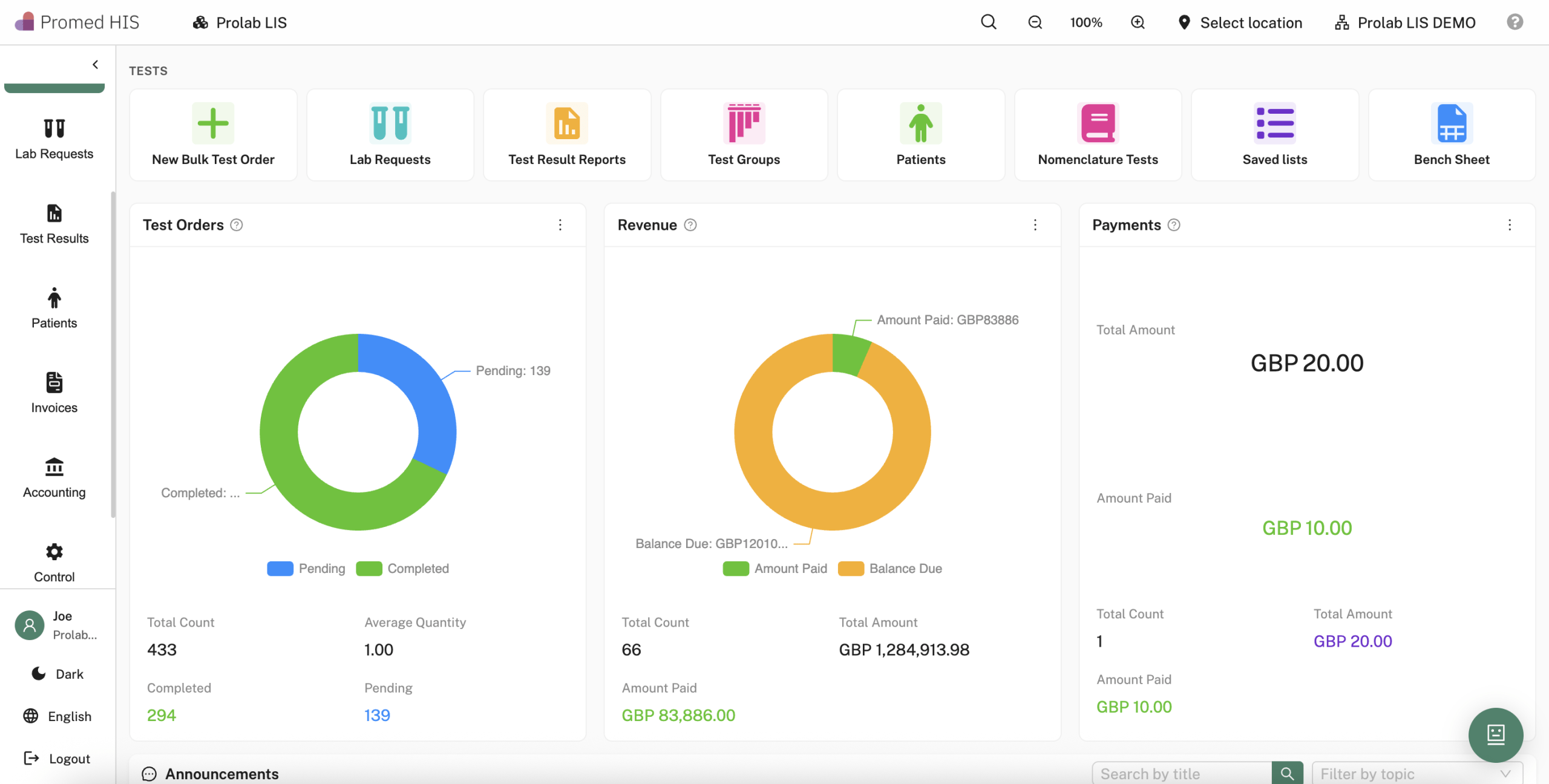
Prolab LIS
Complete laboratory information system — orders, samples, instrument middleware, validation, billing and patient portal.
Solution page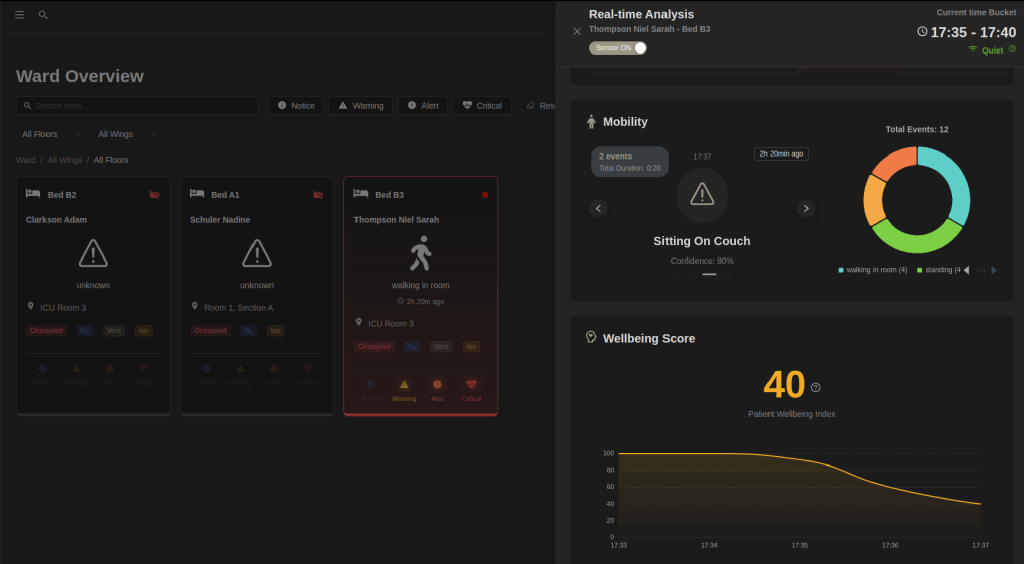
Sonas Care
AI-powered in-home care monitoring — edge analytics, fall detection and caregiver alerts with privacy-by-design architecture.
Case study
GP.2
AI medical scribe for UK general practice — real-time transcription, clinical note generation and NICE-guided reference search.
Case study
YoctoERP
Standalone medical ERP — device compliance, procurement, stock traceability, quality workflows and manufacturing for healthcare operators.
Solution pageAudience
Who Healthcare Software Development Is For
Teams that need a partner who understands clinical context, regulatory expectations and the long operational life of healthcare systems — not just a team that knows how to ship features fast.
Hospitals & clinic groups
Custom modules, workflow automation and EHR extensions that fit how your clinicians actually work — with role-based access and full audit history.
Laboratories & diagnostics
LIS customisation, middleware connectors, result routing and patient-facing report delivery integrated with your existing instrument estate.
Healthtech vendors
Product engineering capacity for startups and scale-ups — from MVP through hardened releases with validation support and clear handover.
Integration programmes
Organisations unifying fragmented systems — FHIR APIs, HL7 interfaces and master data sync without rip-and-replace disruption.
Delivery model
Discovery To Deployment
We start with intended use, users and integration landscape — then architect, build and validate in agile sprints with clinical review gates. Every increment is demoable to stakeholders so feedback shapes the next sprint rather than surfacing only at UAT.
- Requirements & architecture — workflow mapping, threat modelling, data model design and stack selection
- Agile development — two-week sprints with documented acceptance criteria and traceability
- Integration — FHIR, HL7, DICOM and legacy connectors with monitoring and error handling
- Validation support — test plans, IQ/OQ/PQ evidence and release documentation for your QA team
What we build
Clinical, Operational And Integration Software
From EHR extensions and lab workflows to patient portals and device middleware — we deliver maintainable codebases with clear documentation and knowledge transfer to your team. Our healthcare software development spans the full stack: responsive clinical UIs, secure APIs, background processing and operational reporting.
- Clinical applications — specialty workflows, decision support, care pathways and structured data capture
- Operational systems — scheduling, queue management, inventory and revenue cycle tools
- Platform customisation — Promed HIS and Prolab LIS configuration, extensions and white-label deployment
- Patient-facing portals — appointments, results access and secure messaging with consent controls
How we work
Our Healthcare Software Development Process
Transparent phases with clinical checkpoints — so IT, clinical leadership and compliance stay aligned from kick-off to go-live.
flowchart LR
  A["Discovery workshops"] --> B["Iterative build"]
  B --> C["Integration & hardening"]
  C --> D["Go-live & handover"]
  A -.-> A1["Workflow map · backlog · architecture"]
  B -.-> B1["2-week sprints · clinical review gates"]
  C -.-> C1["FHIR/HL7 connectors · security review"]
  D -.-> D1["Runbooks · training · support handover"]
Discovery workshops. We map current-state workflows, pain points and integration touchpoints with the people who use them daily. Outputs include a prioritised backlog, non-functional requirements (performance, availability, security) and a high-level architecture diagram.
Iterative build. Sprints deliver working software in your environment or ours. Clinical champions review each increment; change requests flow through a lightweight governance process so scope stays controlled without blocking necessary adjustments.
Integration & hardening. Connectors to EHR, LIS, PACS and third-party services are tested under realistic load. Security review covers authentication, encryption, logging and GDPR-aligned data retention before production cutover.
Go-live & handover. Deployment runbooks, admin training and source-code documentation ensure your team can operate and extend the system. We offer retained support or transition to your internal team on agreed terms.
Outcomes
Benefits Of Custom Healthcare Software Development
Clinical fit
Software shaped around your workflows — reducing workarounds, duplicate entry and clinician frustration at the point of care.
Connected systems
FHIR and HL7 expertise so new applications exchange data with your existing estate instead of creating another silo.
Security by design
Threat modelling, role-based access, audit trails and ISO 27001-aligned practices embedded from architecture through deployment.
Validation-ready
Test evidence and documentation structured for your QA and information governance processes — including IQ/OQ/PQ where required.
Sustainable ownership
Clean code, automated tests and knowledge transfer so your team maintains and extends the product long after launch.
Predictable delivery
Sprint cadence, visible backlogs and regular demos — so stakeholders see progress and risks are surfaced early.
Common questions
Healthcare Software Development FAQ
How is healthcare software development different from general custom software?
Healthcare systems operate under stricter security, privacy and often regulatory constraints. Clinical workflows have safety implications; data must flow correctly between systems; and audit trails are non-negotiable. We apply domain knowledge — terminology standards, integration patterns and validation expectations — that generalist agencies typically lack.
Do you only build on Promed HIS and Prolab LIS?
No. We customise and extend our own platforms where they fit your needs, and we build standalone applications, middleware and integrations against third-party EHRs, LIS products and legacy systems. The right approach depends on your existing estate and long-term strategy.
Can you work alongside our internal IT team?
Yes — that is our preferred model for many provider organisations. We complement your team with healthcare-specific engineering capacity, follow your change management processes and leave documentation so internal staff can sustain the solution.
What technologies do you use?
Stack selection follows project requirements — typically modern web frameworks for clinical UIs, RESTful and FHIR APIs, message queues for HL7 processing and cloud or on-premise hosting to match your data residency policy. We favour maintainable, well-supported technologies over novelty.
How do we get started?
Contact us with a brief description of the problem, your user groups and any systems we would need to integrate. We schedule a discovery call and return a scoped proposal with phases, indicative timeline and engagement model — fixed-price discovery, time-and-materials build, or hybrid.
Start Your Project
Tell us what you need to build — we will respond with a scoped proposal and timeline for your healthcare software development programme.
Contact Us