GP.2 Medical Scribe AI – [Case Study]

Case study · SaMD
GP.2 — AI medical scribe for UK general practice
How Yoctobe built an AI-powered documentation platform for GP.2 Ltd in Wales — real-time transcription, structured clinical notes and NICE-guided reference search in live NHS workflows.
Executive summary
GP.2 is an AI-powered medical documentation platform developed by Yoctobe for GP.2 Ltd in Wales, designed to improve clinical workflow efficiency in UK general practice. This case study covers implementation at Riverside Medical Centre, measured outcomes, and how GP.2 compares to alternatives in speed, UK-specific clinical relevance and total cost of ownership.
The challenge
General practitioners in the UK face an increasing administrative burden, with documentation consuming approximately 40–50% of consultation time. That overhead reduces patient face-to-face time, contributes to clinician burnout, and delays access to complete medical records.
The solution
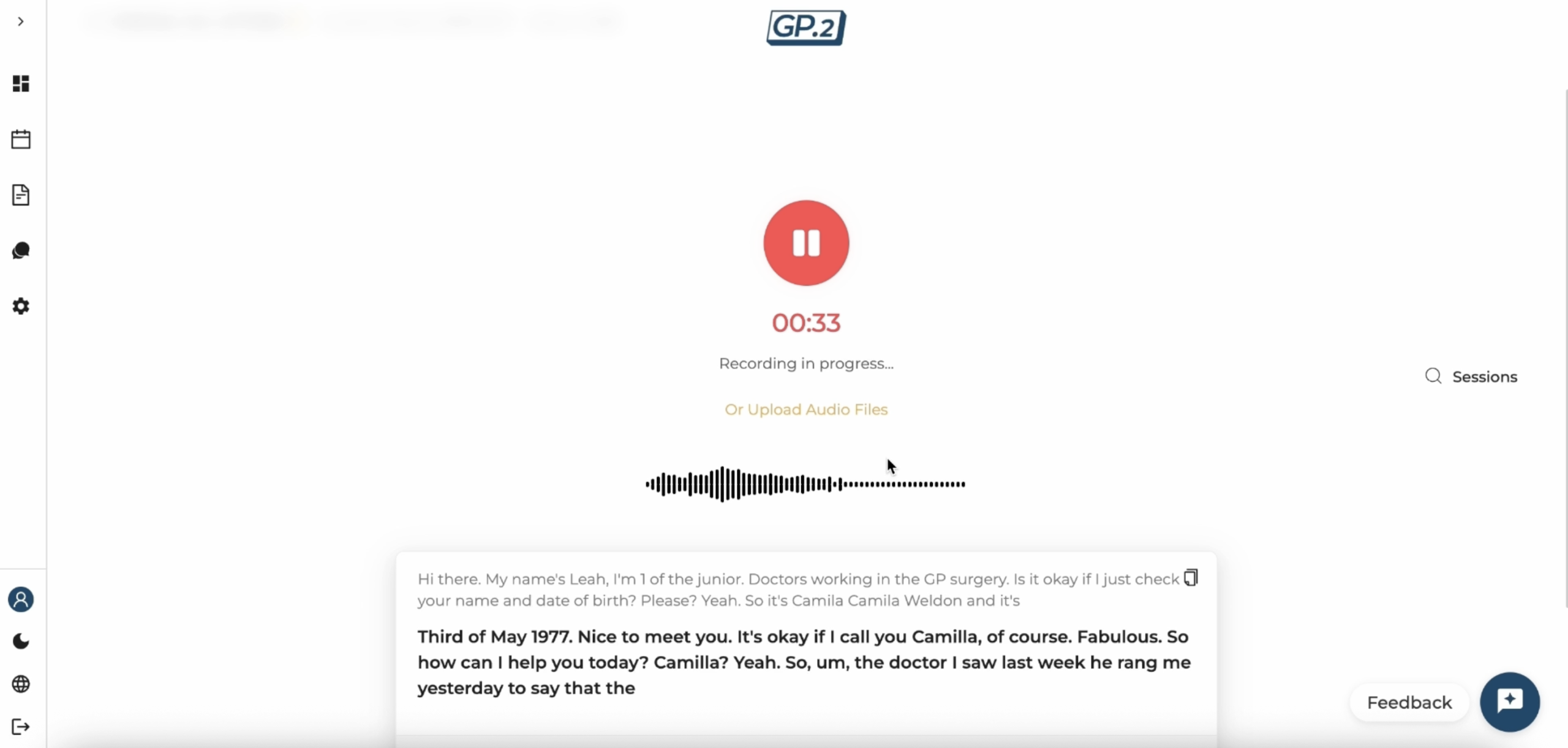
GP.2 combines state-of-the-art transcription, intelligent document processing, and reference-bound medical information retrieval in one platform purpose-built for NHS workflows.

Platform capabilities
AI-powered medical scribe
- Speech recognition optimised for medical terminology
- Real-time transcription during patient consultations
- Automatic structuring of clinical notes into standardised formats
- Context-aware documentation aligned to clinical workflows


Ask GP.2 — reference-bound medical chat
- Instant access to thousands of trusted medical references
- NICE guidelines integration with evidence-based responses
- Direct citations and links to authoritative UK and international sources


Intelligent case navigation & collaboration
- Auto-generated follow-up questions based on consultation context
- Clinical reasoning pathways with prompts for history, examination and differentials
- Unlimited templates, team collaboration and practice-specific configuration
Measured outcomes
At Riverside Medical Centre over six months (n=7 clinical staff):
- 62% reduction in documentation time per consultation (8.5 → 3.2 minutes)
- 4.5 hours saved per GP per week; 45 minutes less after-hours admin daily
- 2.1 minutes more face-to-face time per consultation; 3–4 additional appointments per GP weekly
- 94% of notes complete vs 78% baseline; 87% NICE adherence vs 71%
- 100% would recommend GP.2; average satisfaction 4.7/5
- 400% ROI demonstrated in the deployment period
Why GP.2 vs alternatives
GP.2 delivers 40–60% faster processing across transcription, note generation and reference retrieval compared to platforms like Heidi — with NICE integration, unlimited templates and UK NHS workflow optimisation included without tier restrictions.
Key success factors
- Technical excellence — low-latency transcription and reliable performance clinicians trust in live consultations
- Clinical relevance — reference-bound AI and NICE integration at the point of decision
- User-centric design — minimal training, flexible templates and team collaboration
- Welsh innovation — local support from Yoctobe with NHS Wales and UK healthcare context
Building AI documentation or clinical decision support software?