Case Study: Sonas Care — AI-Powered Care Monitoring


Case study · AIaMD
Sonas Care — AI-powered in-home care monitoring
How intelligent video analytics help families and care providers detect falls, routine disruption and environmental hazards — while keeping privacy at the centre of the architecture.
The problem
Ageing in place is the preference for most older adults — yet families and community care teams lack continuous visibility into daily activity without intrusive round-the-clock presence. Falls remain a leading cause of injury; subtle mobility or behavioural changes often surface only after an emergency admission. Reactive care is expensive for health systems and exhausting for relatives who carry constant worry.
Traditional camera systems store footage and create surveillance anxiety. What was needed was ambient intelligence: understanding patterns and risks from existing home devices, alerting caregivers when something matters, and avoiding retention of raw video that undermines trust.
The solution
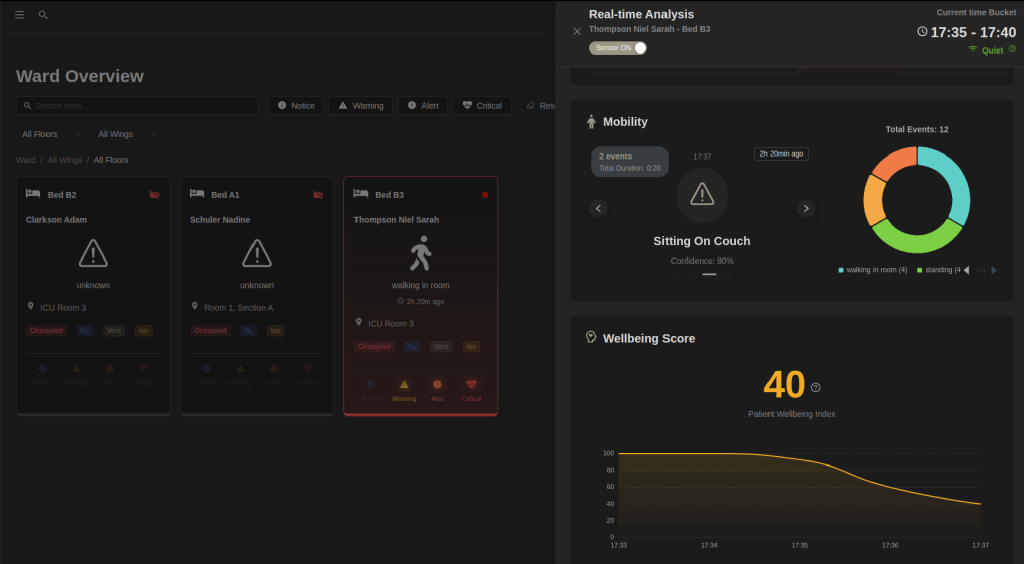
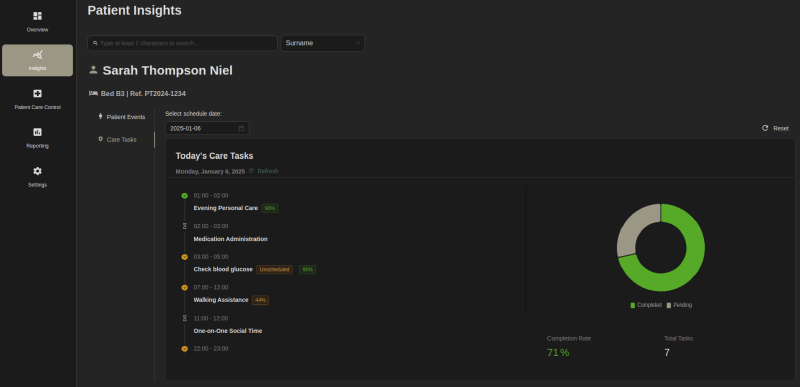
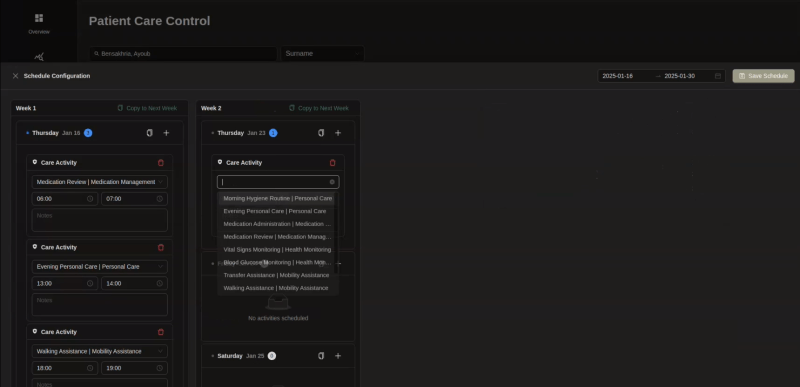
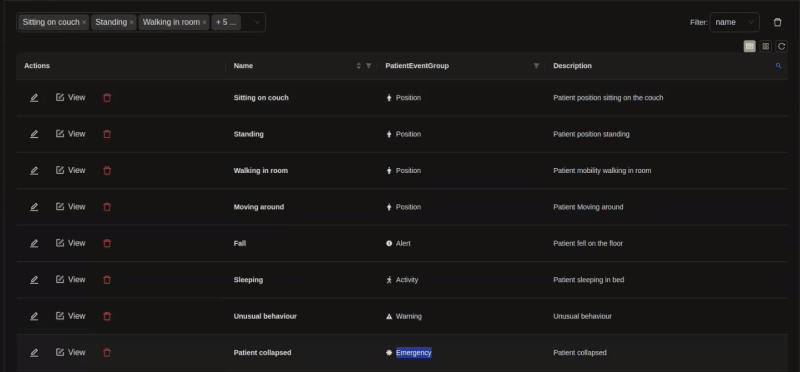
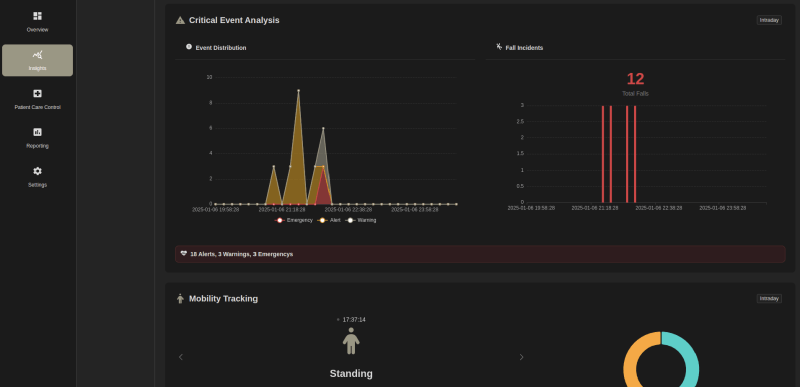
Sonas Care connects to existing cameras and smart-home devices, applying edge-based video understanding to learn normal routines and detect anomalies in real time. The platform is configurable — families and clinicians define events and thresholds aligned to each individual’s care plan.
- Movement and gait analysis — detects mobility changes and fall events
- Routine monitoring — sleep, daily activity and behavioural pattern shifts
- Environmental safety — hazards and unusual conditions in the home
- Smart alerts — phone, text and app notifications with weekly trend reports
Processing runs locally on device where possible; health insights — not raw video — are encrypted for authorised recipients. The design supports GDPR compliance and HIPAA-ready deployment patterns for provider-led programmes.
Architecture highlights
- Edge computing — low-latency detection; continued local monitoring during connectivity loss
- Privacy by design — no long-term video storage; encrypted insight payloads only
- Smart home integration — thermostats, lighting, security and IoT sensors in one care context
- Azure-backed services — OAuth 2.0 access, AES-256 in transit, audited cloud backup
- Machine learning — models improve as routines stabilise over initial calibration weeks
Delivery approach
Yoctobe delivered Sonas Care as an AI-as-a-medical-device programme — classification, risk management, software lifecycle documentation and security evidence aligned to how notified bodies assess clinical decision support and monitoring software. Implementation follows a structured onboarding path:
- Clinical and household needs assessment
- Installation with existing camera and device infrastructure
- Two-to-three week personalisation — AI learns baseline routines
- 24/7 monitored operation with configurable alert routing
Outcomes
Sonas Care enables proactive intervention — caregivers respond to predictive signals before crises escalate, supporting independence at home and reducing preventable hospitalisations. Families gain peace of mind without replacing human care; providers gain structured visibility into daily health patterns that episodic visits cannot capture.
Building AI-enabled care or diagnostic software?